

A vineyard can tell us a great deal about its health, but sometimes the warning signs arrive too late. Wilting leaves, reduced canopy activity, declining photosynthesis, and slower growth may indicate that grapevines are experiencing environmental stress. Yet identifying the actual cause is not always straightforward.
This guide looks at how water stress develops below the surface, what recent research says about soil water-retention technologies in vineyards, and how materials such as Hidrokeeper® and EF Polymer can support healthier vines, smarter irrigation, and greater resilience in a changing climate.
What Is the Difference Between Heat Stress and Water Stress?
Is the vine suffering from insufficient water in the soil? Or is it responding to excessive heat and atmospheric dryness? Although these conditions are closely related, they are not the same.
Water stress develops when the water available to the plant cannot adequately meet its physiological needs. This may result from insufficient soil moisture, limited root uptake, or an imbalance between water absorption and water loss.
Heat stress occurs when elevated temperatures disrupt normal physiological processes. High temperatures can also increase the atmosphere’s demand for water, intensifying plant dehydration even when some soil moisture remains available.
For vineyard managers, distinguishing these stresses is essential. Increasing irrigation may help address soil water deficits, but it does not necessarily resolve extreme temperatures or high atmospheric evaporative demand. The challenge is to anticipate stress rather than respond only after visible damage appears.
Why Does Water Availability in the Root Zone Matter?
Water is fundamental to nearly every aspect of grapevine physiology, including photosynthesis, nutrient transport, cellular function, and temperature regulation.
When soil moisture becomes limited, vines respond by regulating their stomata, the microscopic openings in leaves that control gas exchange and water vapor loss. Stomatal closure helps conserve water, but it also reduces carbon dioxide uptake, potentially limiting photosynthetic activity and plant growth. This protective response can begin well before leaves show obvious signs of wilting.
Therefore, successful irrigation management is not simply about how much water enters the soil. It is also about how much water remains available to the roots between irrigation events. A more stable moisture environment can help reduce the intensity of water deficits and support vine function during challenging growing conditions.
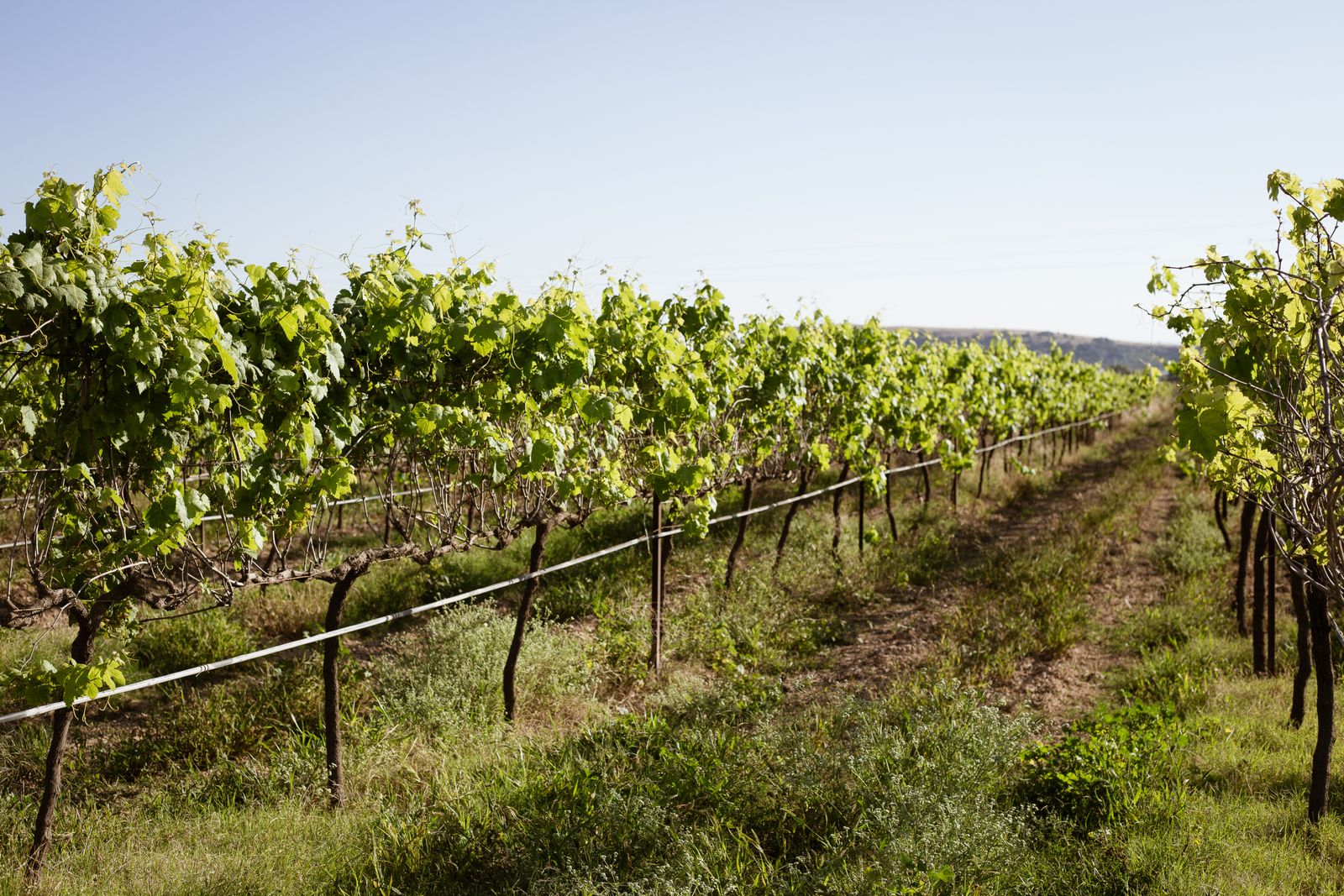
Can Soil Water-Retention Technologies Make a Difference?
Superabsorbent polymers and hydrogels are materials capable of absorbing and retaining substantial quantities of water relative to their dry weight. When incorporated appropriately into the soil, they can act as localized water reservoirs.
During rainfall or irrigation, these materials absorb water and swell. As the surrounding soil dries, a portion of that retained moisture can become available for root uptake, depending on the characteristics of the polymer, soil, and growing conditions. The process follows a simple principle: Absorb. Retain. Release. Recharge.
Rather than replacing irrigation, water-retention technologies can complement an irrigation program by improving soil moisture storage and helping moderate fluctuations between watering cycles. For vineyards, this approach is particularly interesting because grapevines may experience substantial changes in water demand throughout the growing season.
What Does the Research Say About Hydrogels in Vineyards?
The potential of superabsorbent hydrogels in viticulture is supported by emerging scientific research. A study published in Agricultural Water Management in December 2024, titled “Superabsorbent hydrogels: A new tool for vineyard water management?”, investigated the effects of synthetic and organic-derived hydrogels on soil water availability and grapevine physiology.
Researchers evaluated three hydrogel materials and observed improvements in soil water-holding characteristics. Among the findings:
- All three hydrogels increased soil field capacity and maximum plant-available water.
- Depending on the material, maximum plant-available water increased by approximately 43% to 84% under the experimental conditions.
- Grapevines grown in hydrogel-amended soil maintained improved stem water potential during periods of reduced water supply.
- Both synthetic and organic-derived materials demonstrated potential to support grapevine water status.
These results are promising, but they should be interpreted carefully. The study evaluated specific hydrogel formulations under controlled conditions, not commercial field performance across all vineyards. Additional field research is needed to determine the influence of soil type, rootstock, application rate, irrigation strategy, and long-term growing conditions.
Nevertheless, the findings reinforce an important concept: improving water availability within the root zone can help grapevines better manage periods of limited water supply.
Hidrokeeper® and EF Polymer: Two Approaches to Soil Moisture Management
At Qemi International, we recognize that agricultural water management requires solutions adapted to different soils, crops, climates, and production systems. Two technologies within our agricultural solutions portfolio are Hidrokeeper® and EF Polymer.
Hidrokeeper®: Supporting Consistent Root-Zone Moisture
Hidrokeeper® is a synthetic superabsorbent polymer designed to absorb and retain water within the soil. Its water-storage and release behavior can help support moisture availability near plant roots between irrigation or rainfall events. When correctly selected and applied, Hidrokeeper® may contribute to:
- Improved root-zone water retention
- Reduced fluctuations in soil moisture
- More effective use of irrigation water
- Greater resilience during intermittent water deficits
The objective is not to eliminate plant stress entirely, but to help reduce one of its important contributing factors: insufficient water availability.
EF Polymer: Organic-Based Water Retention
EF Polymer offers a different approach through superabsorbent technology produced from plant-derived raw materials, including agricultural fruit residues. Its organic-based formulation is designed to improve water retention in agricultural soils and support more efficient use of available moisture.
For growers evaluating plant-derived soil amendments, EF Polymer offers an alternative to conventional synthetic water-retention technologies. You can read more in our comparison of organic vs synthetic superabsorbent polymers.
Both technologies address the challenge of soil moisture management, but they differ in composition and product characteristics. Their suitability should be evaluated according to soil conditions, crop requirements, application methods, and production objectives. Neither product should be considered a substitute for diagnosing the source of plant stress or implementing a sound irrigation strategy.
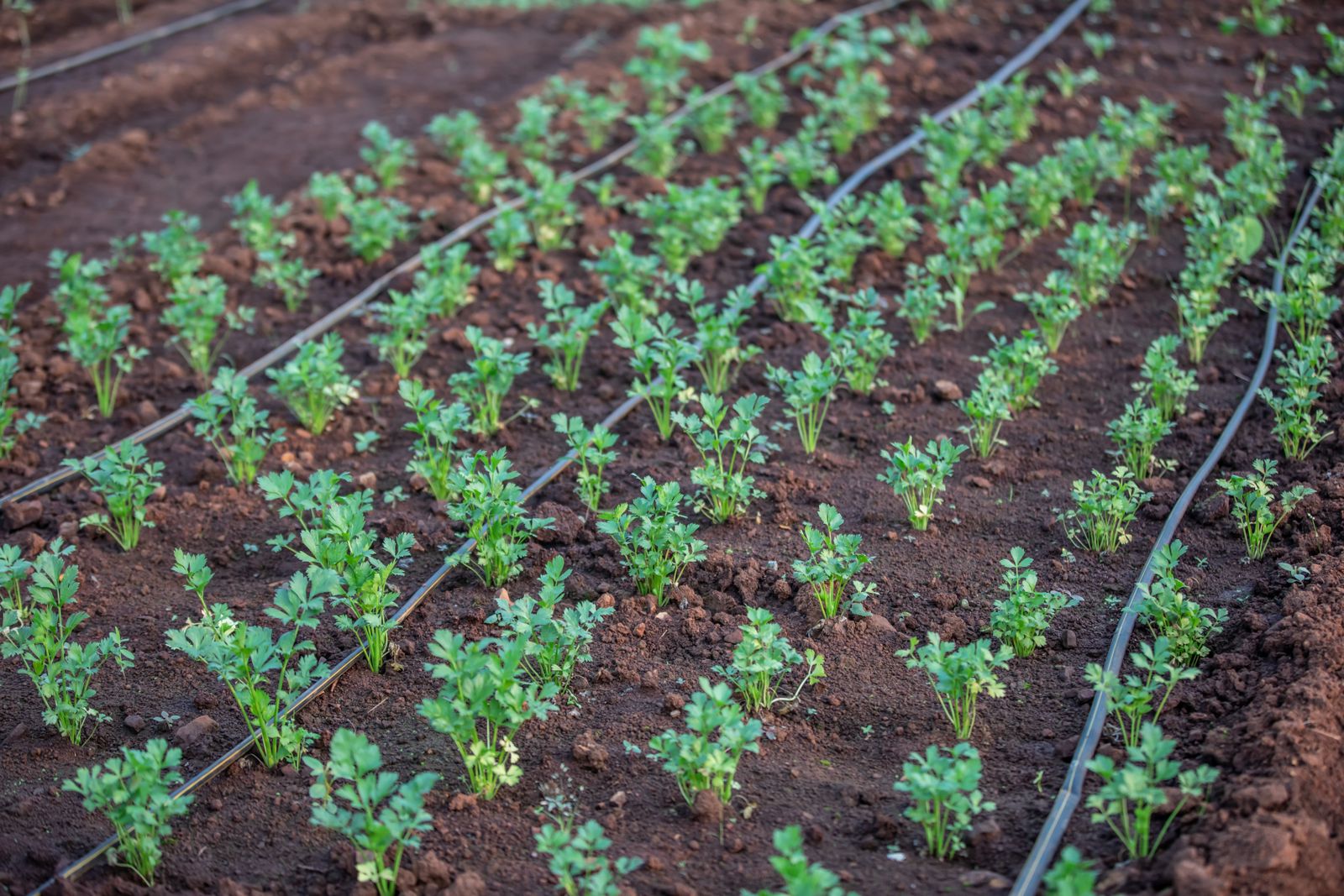
Why This Matters for Vineyard Management
Vineyards face increasingly complex decisions surrounding irrigation scheduling, water availability, temperature extremes, and crop performance. The goal is not necessarily to maintain maximum soil moisture at all times. In fact, carefully managed water deficits are sometimes used in viticulture to influence vegetative growth and fruit development.
Instead, effective water management requires providing adequate water at the appropriate stages while avoiding uncontrolled or excessive stress. Soil water-retention technologies may be particularly valuable when incorporated into a broader management program that considers:
- Soil texture, structure, and water-holding capacity
- Root development and active rooting depth
- Irrigation frequency and seasonal demand
- Atmospheric conditions and evapotranspiration
- Grapevine variety, rootstock, and growth stage
- Soil moisture monitoring and plant water-status measurements
A technology that retains water is most useful when it complements the vineyard’s actual physiological and agronomic needs.
How Can Vineyards Move from Reactive to Proactive Water Management?
Traditional vineyard scouting often relies heavily on what can be observed above ground. However, meaningful changes in plant water status may occur long before visible symptoms appear.
Monitoring soil moisture, plant water potential, and atmospheric demand allows growers to identify developing problems earlier and refine irrigation decisions. Adding suitable water-retention technologies to this approach creates another opportunity: managing part of the risk before conditions become critical.
Rather than waiting for the canopy to signal distress, vineyard managers can focus on developing a root environment that better supports the vine through changes in water availability. This represents an important shift: from responding to stress toward improving the growing conditions that influence it.
Frequently Asked Questions
Do soil water-retention polymers replace irrigation?
No. Superabsorbent polymers and hydrogels complement an irrigation program. They help store water in the root zone and moderate moisture fluctuations between watering cycles, but they do not replace a sound irrigation strategy.
How do superabsorbent polymers work in vineyard soil?
They absorb water during rainfall or irrigation and swell. As the surrounding soil dries, part of that retained moisture can become available to the roots, then the material recharges at the next watering. Absorb, retain, release, recharge.
What is the difference between Hidrokeeper® and EF Polymer?
Hidrokeeper® is a synthetic superabsorbent polymer. EF Polymer is an organic-based superabsorbent made from plant-derived raw materials, including agricultural fruit residues. Both improve soil water retention, and the right choice depends on soil conditions, crop requirements, application method, and production goals.
Can more irrigation fix heat stress in grapevines?
Not always. Extra irrigation can help with soil water deficits, but it does not necessarily resolve extreme temperatures or high atmospheric evaporative demand. Diagnosing the actual source of stress comes first.
Are the study results guaranteed for Hidrokeeper® or EF Polymer?
No. The 2024 study evaluated specific hydrogel materials under controlled conditions. Its findings should not be read as product-specific performance guarantees, and results in the field depend on soil type, rootstock, application rate, and irrigation strategy.
Summary
In a changing agricultural environment, successful water management is about more than irrigation volume. It is about understanding how water moves through the soil, how plants respond to environmental conditions, and how innovative materials can help improve the efficiency of the soil-plant system. We cannot control the weather. But we can improve how we manage the water that reaches the roots. And in viticulture, that can make a meaningful difference.
At Qemi International Inc, we provide specialized chemical and agricultural solutions designed to address practical challenges across diverse industries and growing environments. Through our agricultural solutions portfolio, including Hidrokeeper® and EF Polymer, we work with partners and customers to identify solutions that support water management, soil performance, and agricultural productivity. Contact our team to find the right water-retention approach for your vineyard. Qemi International: We Formulate to Need.
Scientific Reference: Frioni, T., Bonicelli, P. G., Ripa, C., Tombesi, S., & Poni, S. (2024). Superabsorbent hydrogels: A new tool for vineyard water management? Agricultural Water Management, 306, 109145. https://doi.org/10.1016/j.agwat.2024.109145
Research findings cited in this article refer to the hydrogel materials evaluated in the published study and should not be interpreted as product-specific performance guarantees for Hidrokeeper® or EF Polymer.