
Colloidal Silica: Precision Chemistry That Drives Performance Across Industries

In today’s industrial landscape, performance is no longer achieved by using standard materials—it’s achieved by engineering materials at the microscopic level.
This is where colloidal silica stands apart.
Colloidal silica is not just another silica product. It is a highly controlled suspension of nano-sized silica particles, designed to deliver measurable improvements in strength, durability, surface quality, and process efficiency across multiple industries.
What Makes Colloidal Silica Different?
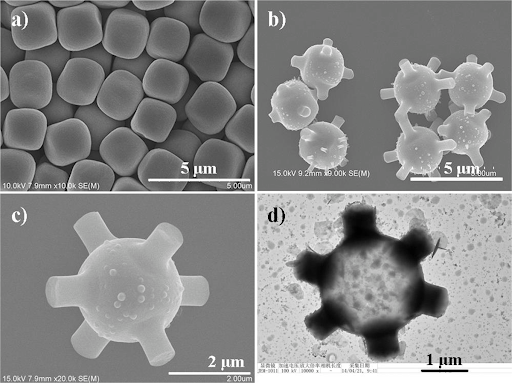
At its core, colloidal silica consists of ultrafine SiO₂ particles dispersed in water, typically ranging from 5 to 100 nanometers. But what truly defines its value is not just its size—it’s the control behind it.
- Particle size distribution
- Surface charge and stability
- pH and ionic environment
- Interaction with surrounding materials
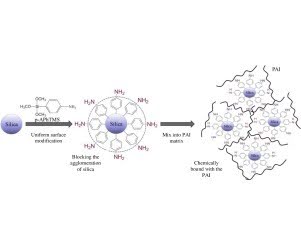
These variables determine whether colloidal silica acts as a binder, densifier, polishing agent, or functional additive. This is not a one-size-fits-all product. This is engineered performance.
Where Colloidal Silica Delivers Real Impact
Advanced Coatings & Surface Protection

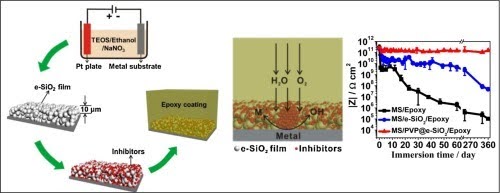
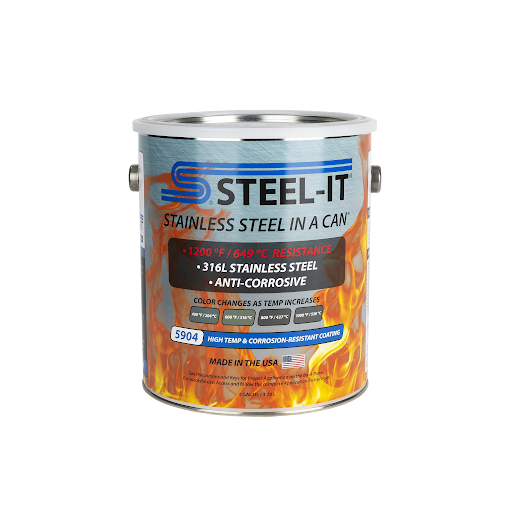
Colloidal silica is widely used in coatings where performance is critical:
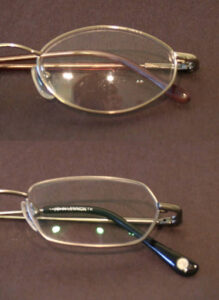
- Scratch-resistant surfaces for glass and plastics
- Anti-reflective coatings for optics and solar panels
- Barrier coatings for packaging and metals
It enhances hardness, adhesion, and long-term durability—key requirements in demanding environments.
Construction & Concrete Enhancement
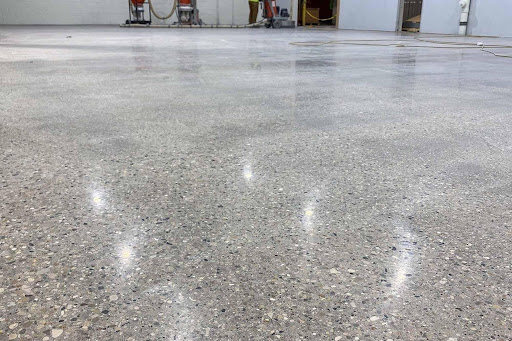
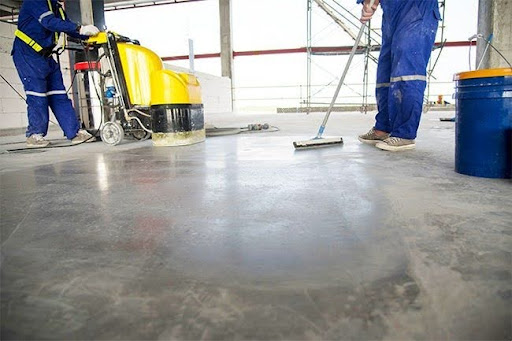
In construction, colloidal silica is used as a densifier and performance enhancer:
- Reduces porosity and permeability
- Improves abrasion resistance
- Increases structural integrity over time
By reacting with calcium hydroxide, it forms additional binding phases that strengthen the concrete matrix.
Semiconductor & Precision Polishing (CMP)
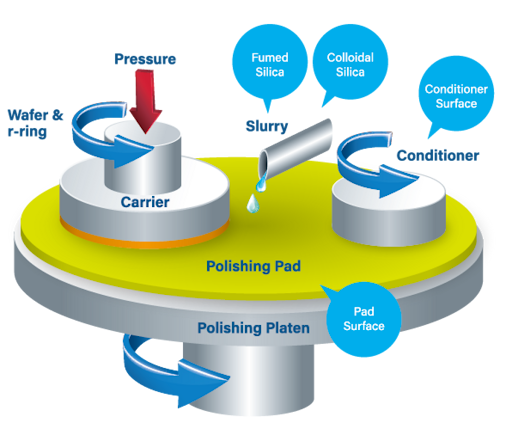
In high-tech applications, precision is everything.
Colloidal silica is a key component in Chemical Mechanical Planarization (CMP):
- Enables nanometer-level surface finishing
- Ensures defect-free semiconductor wafers
- Supports advanced electronics manufacturing
Without it, modern microelectronics would not exist at today’s level of precision.
Catalysts & Chemical Processing
Colloidal silica plays a critical role as a binder and support material:
- Stabilizes catalyst structures
- Improves dispersion of active components
- Enhances thermal and mechanical resistance
This directly impacts efficiency in refining, petrochemicals, and specialty chemical production.
Paper, Packaging & Functional Surfaces
- Improves printability and ink absorption
- Enhances surface smoothness
- Provides functional coatings for specialty papers
Why Formulation Matters More Than Ever
Many suppliers treat colloidal silica as a standard offering. That approach misses the point.
The performance of colloidal silica is defined by how it is engineered:
- The wrong particle size can reduce effectiveness
- Improper stabilization can cause instability or aggregation
- Mismatch with the application can limit performance gains
The difference between average and high-performance systems is formulation expertise.
The Shift: From Commodity to Engineered Solution
Industries are moving away from generic materials toward tailored, application-specific solutions.
Colloidal silica sits at the center of that shift.
It is:
- A strength enhancer in construction
- A precision tool in electronics
- A durability driver in coatings
- A stabilizing force in chemical processing
Final Thought
Colloidal silica is not just a raw material—it is a performance platform.
The companies that understand how to select, modify, and integrate it correctly are the ones gaining a competitive edge in their markets.
Qemi Perspective
At Qemi International, we don’t approach products like colloidal silica as catalog items.
We approach them as solutions to be engineered.
Because in today’s market:
If the material doesn’t fit the application, the application will fail.
FAQs
1. What is colloidal silica?
A controlled suspension of nano-sized silica particles designed to enhance strength, durability, and surface quality.
2. How does colloidal silica improve concrete?
It reduces porosity, increases abrasion resistance, and strengthens the concrete matrix.
3. Where is colloidal silica used?
In coatings, construction, semiconductor polishing (CMP), chemical processing, and paper/packaging industries.
4. Why is formulation important?
Correct particle size, stabilization, and compatibility ensure maximum performance and stability.
5. How does colloidal silica benefit electronics?
It enables nanometer-level surface finishing and defect-free semiconductor wafers.