The Hidden Factor Behind Stability, Texture, and Product Performance
If your cosmetic formulation is failing—separating, feeling greasy, or losing stability—your emulsifier is the problem.
Not your actives.
Not your packaging.
Not your process.
Your emulsifier.
In modern cosmetic formulation, choosing the right emulsifier is not optional—it is the core of product performance.
At Qemi International, we don’t treat emulsifiers as ingredients. We engineer emulsifier systems that control stability, texture, and long-term performance.
What Is an Emulsifier in Cosmetics?
An emulsifier in cosmetics is a functional ingredient that stabilizes oil and water phases—but that definition is incomplete.
A high-performance emulsifier controls:
- Emulsion stability in creams and lotions
- Skin feel (light, rich, non-greasy, fast-absorbing)
- Viscosity and rheology
- Active ingredient delivery
- Shelf life under heat, transport, and storage stress
If your emulsifier fails—your product fails.
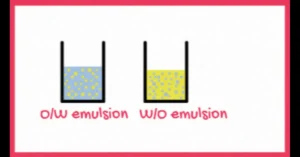
Types of Cosmetic Emulsions (O/W vs W/O) – And Why the Choice Is Critical
Oil-in-Water (O/W) Emulsions
- Water is the continuous phase
- Light, elegant, fast absorption
- Ideal for lotions, day creams, serums
Water-in-Oil (W/O) Emulsions
- Oil is the continuous phase
- Rich, protective, occlusive
- Ideal for night creams, barrier repair, extreme dryness
Choosing the wrong emulsion type doesn’t just affect texture—it changes consumer perception and product positioning.
HLB Value: The Most Overlooked Parameter in Emulsifier Selection
The Hydrophilic-Lipophilic Balance (HLB) determines whether your emulsifier will actually stabilize your formulation.
- Low HLB (3–6) → favors oil phases (W/O systems)
- High HLB (8–18) → favors water phases (O/W systems)
Mismatch your HLB?
You get:
- Phase separation
- Cream breakdown
- Reduced shelf life
- Customer complaints
HLB is not optional knowledge—it is formulation control.
Natural vs Synthetic Emulsifiers in Cosmetics: Performance vs Labeling
Natural Emulsifiers
- Plant-derived (lecithin, glyceryl esters)
- Clean-label appeal
- Often less stable without optimization
Synthetic Emulsifiers
- Highly consistent
- Stronger stability across conditions
- Better scalability in manufacturing
The market asks for “natural.”
But performance still decides success.
The right answer is not natural vs synthetic—
it’s the right system engineered for your formulation.
Why Most Cosmetic Formulations Fail (And It’s Not What You Think)
Most failures come from one mistake:
Treating emulsifiers as interchangeable commodities.
Common formulation errors:
- Selecting emulsifiers based on price instead of compatibility
- Ignoring oil phase composition
- Not testing under real storage conditions
- Using legacy formulations without optimization
This leads to:
- Instability in creams and lotions
- Texture inconsistency
- Reduced product lifespan
- Brand damage
Qemi’s Approach: Custom Emulsifier Systems for Cosmetics
At Qemi International, we don’t sell emulsifiers off a shelf.
We:
- Analyze your complete formulation system
- Match emulsifiers to your oil phase chemistry
- Optimize for texture, stability, and scalability
- Develop custom emulsifier blends when needed
Because in real-world formulation:
There is no universal emulsifier.
Only the right one for your system.
Final Take: The Emulsifier Is Your Product
Your cream is not defined by its actives.
It is defined by how it performs.
- How it spreads
- How it absorbs
- How it holds over time
That performance is controlled by one thing:
The emulsifier system.
Work With Qemi
If your formulation needs:
- Better stability
- Improved texture
- Longer shelf life
- Differentiation in the market
We build the solution—not just supply the ingredient.