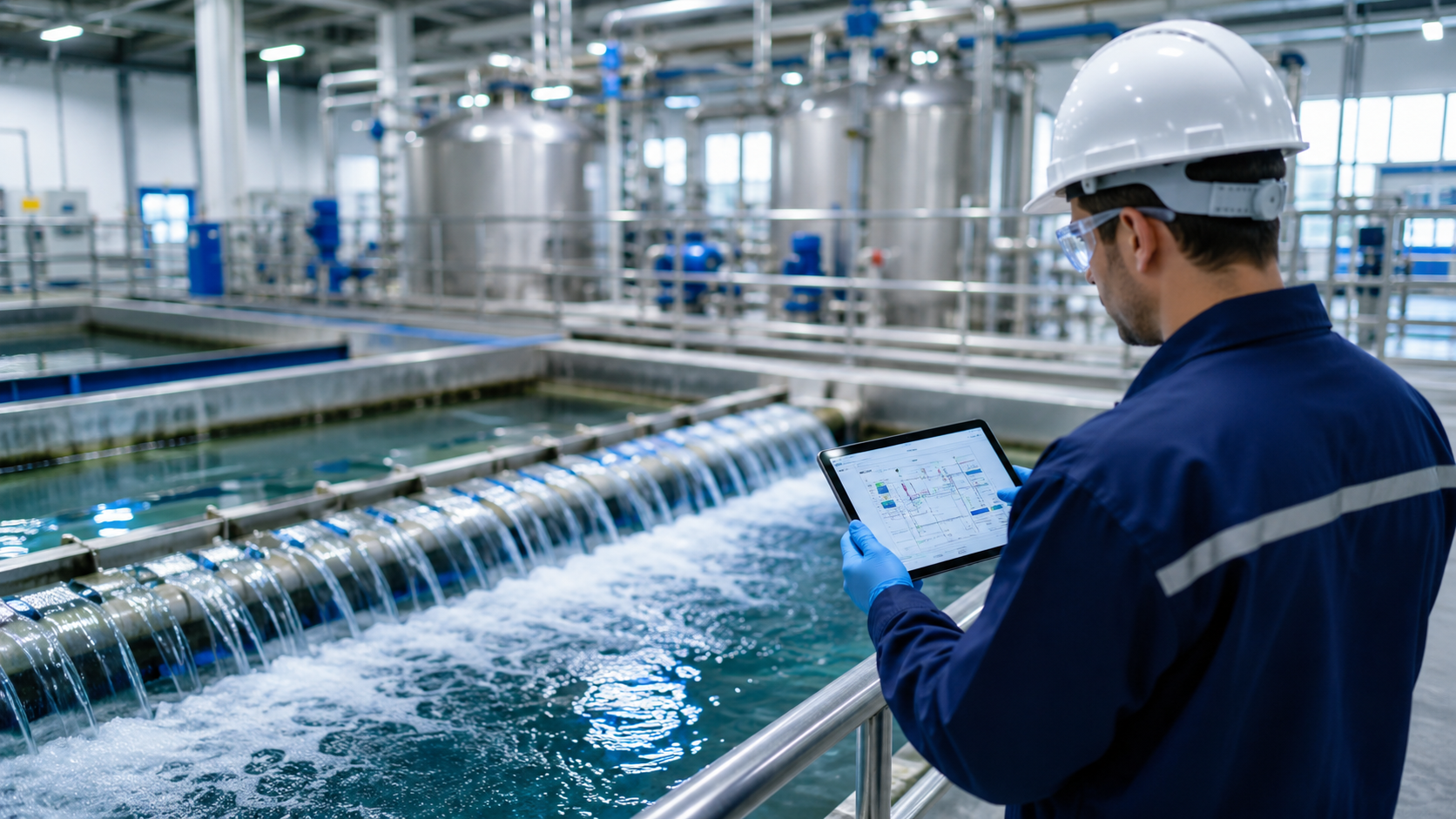
Choosing the wrong polymer or coagulant in a potable water treatment system does not just affect process efficiency. It can put public health at risk. The right chemical selection determines how well suspended solids, pathogens, and organic matter are removed before water reaches homes, hospitals, and schools. This post breaks down what treatment professionals need to know about coagulant and polymer selection, NSF certification requirements, and the specific product categories that keep drinking water safe and compliant.
Why Chemical Selection in Drinking Water Treatment Is Not a One-Size-Fits-All Decision
The chemistry of source water varies significantly depending on geography, season, and upstream land use. A polymer that performs well in a reservoir-fed plant in the Gulf Coast region may not deliver the same results in a groundwater-dependent facility in Central America or Southeast Asia.
Coagulants and flocculants work by neutralizing the surface charge on suspended particles, causing them to aggregate into larger clusters called flocs. These flocs then settle or are filtered out. The challenge is that water chemistry, including pH, turbidity, organic load, and mineral content, directly affects how well a given chemical performs. Selecting without testing is one of the most common and costly mistakes treatment plants make.
There are three primary factors that should drive every chemical selection decision:
Source water characterization is the starting point. Knowing the turbidity range, organic carbon levels, and seasonal variation of your source water determines whether you need a high-charge coagulant, a high-molecular-weight flocculant, or a blended system.
Regulatory compliance is non-negotiable. In the United States and in countries that follow U.S. standards, any chemical used in drinking water treatment must meet NSF/ANSI/CAN Standard 60. This standard defines maximum allowable contaminant levels that can be contributed by treatment chemicals at their maximum use dose. Products that have not been evaluated to this standard should not be used in potable water applications, regardless of their performance profile.
Application fit matters as much as chemistry. A product may be certified and technically sound but still be a poor fit for a given system if dosing infrastructure, mixing energy, or contact time does not support its mechanism of action.
What Is the Difference Between Coagulants and Flocculants in Water Treatment?
Coagulants and flocculants are often mentioned together, but they serve different functions in the treatment train. Coagulants destabilize suspended particles by neutralizing their charge, while flocculants bridge those destabilized particles together into settleable masses.
Coagulants typically include aluminum-based products like aluminum sulfate (alum) and polyaluminum chloride (PAC), as well as organic coagulants like polyDADMAC and polyamines. Alum has been used in municipal water treatment for over a century and remains widely used due to its low cost and proven performance. PAC products offer advantages at lower temperatures and across a wider pH range, which makes them a strong choice in regions with variable source water conditions.
Organic coagulants like polyDADMAC (pDADMAC) are synthetic cationic polymers that work effectively at lower doses than alum in certain applications. They also generate less sludge, which reduces disposal costs and dewatering demands. However, they require careful dosing because overdosing can actually restabilize particles and worsen treated water quality.
Flocculants are typically polyacrylamide-based and are added after coagulation to promote floc growth. Anionic polyacrylamides are the most widely used in potable water systems because of their compatibility with positively charged aluminum hydroxide flocs. Non-ionic and cationic grades are also used depending on source water conditions.
One important distinction: not all flocculants approved for industrial use are cleared for drinking water applications. This is where NSF certification becomes a hard requirement, not just a recommendation.
NSF/ANSI/CAN 60 Certification: What It Means and Why It Cannot Be Skipped
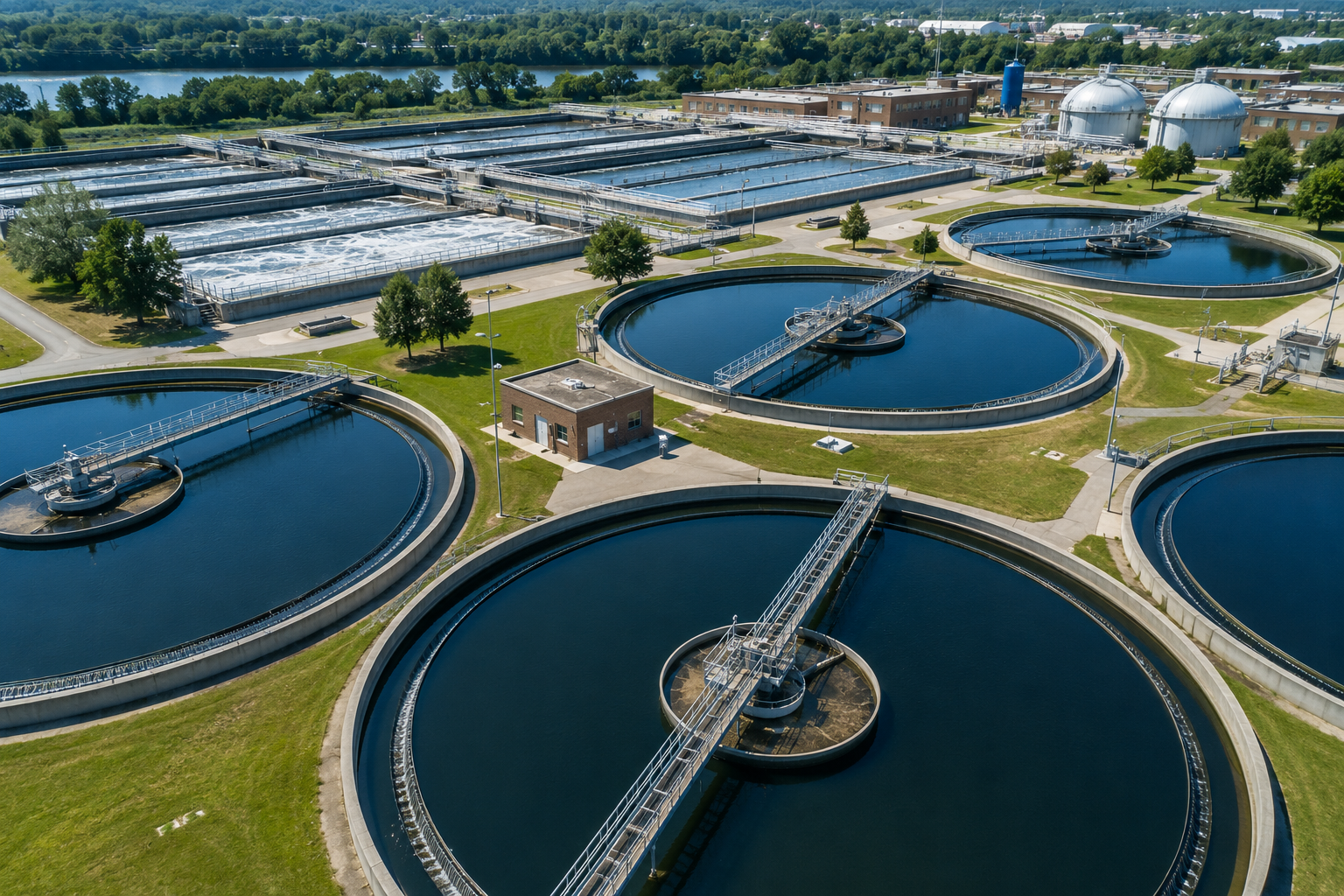
NSF/ANSI/CAN Standard 60 is the benchmark for drinking water treatment chemicals in North America. It was established after the U.S. Environmental Protection Agency transferred its chemical approval program to NSF International in 1985. Since then, it has become the globally referenced standard for verifying that treatment chemicals do not contribute unsafe levels of contaminants to treated water.
Certification under this standard means that a product has been independently tested and verified to ensure that impurities, including residual monomers, heavy metals, and byproducts, remain below established maximum allowable levels at the highest recommended use dose.
For polyacrylamide-based flocculants, one of the primary concerns is residual acrylamide monomer, which is a neurotoxin and a probable human carcinogen. NSF 60 certification requires that certified products meet strict limits on this residual, giving treatment operators confidence that the product is safe for use in systems that produce drinking water.
For organic coagulants like polyDADMAC, certification confirms that the product, at its maximum dosage, does not introduce epichlorohydrin or other process-related impurities above acceptable thresholds.
Products that carry NSF 60 certification are listed publicly on the NSF International website at www.nsf.org, allowing utilities, engineers, and procurement teams to verify compliance before purchase. Buying certified products from a supplier who maintains that documentation and can provide supporting technical data is the most defensible position a treatment operation can take from both a regulatory and liability standpoint.
Our potable water product line includes coagulant and flocculant grade polymer products that are certified to NSF/ANSI/CAN 60, covering polyacrylamide grades, pDADMAC, polyamines, polyaluminum chloride solutions, and polymer blends.
Aluminum-Based vs. Organic Coagulants: Which Performs Better?
The aluminum versus organic coagulant question does not have a universal answer. Each has a distinct performance profile, and the right choice depends on what the treatment system is trying to accomplish.
Aluminum sulfate is cost-effective and well understood. Its main drawbacks are pH sensitivity, meaning it works best between pH 6 and 8, and the volume of sludge it produces. In warmer climates with higher source water temperatures, alum performs predictably. In colder source waters, coagulation efficiency drops noticeably, and PAC products tend to outperform because they hydrolyze more completely at lower temperatures.
Polyaluminum chloride (PAC) products like our QEMIPAC 7533-N offer a pre-hydrolyzed aluminum species that is less pH-dependent and works well across a broader temperature range. PAC also generates approximately 25 to 40 percent less sludge than equivalent doses of alum, which is a meaningful operational advantage for plants with limited sludge handling capacity.
Organic coagulants, including polyDADMAC and EPI-AMIDE (EPI-AMIVE) products, work through a different mechanism. Rather than forming a metal hydroxide precipitate, they act as charge neutralizers and bridging agents. They are particularly effective as primary coagulants in low-turbidity, high-color source waters. They are also used as coagulant aids to reduce the dose of aluminum required, which lowers sludge production and chemical costs simultaneously.
A common approach in many treatment facilities across the Houston, Texas region and internationally is to run jar testing to determine the optimal coagulant type and dose for each season or when source water conditions shift significantly. Jar testing removes guesswork and helps facilities avoid both under-dosing, which leads to inadequate treatment, and over-dosing, which wastes chemical and can introduce compliance risk.
How Polymer Molecular Weight and Charge Density Affect Treated Water Quality
This is an area where a lot of treatment operators make costly assumptions. Not all flocculants are created equal, and the two variables that matter most are molecular weight and charge density.
Molecular weight determines the bridging capability of the polymer. High-molecular-weight polyacrylamides form long polymer chains that can span multiple particles and pull them into large, dense flocs that settle quickly. Low-molecular-weight products are better suited for charge neutralization and are often used as coagulant aids rather than primary flocculants.
Charge density determines how strongly the polymer interacts with particles of opposite charge. In potable water treatment, anionic polyacrylamides are most commonly used as flocculant aids. The anionic charge of the polymer interacts with the positively charged aluminum floc surface to promote aggregation. The right charge density depends on the surface charge of the particles being treated, which is why source water characterization matters so much.
Cationic polyacrylamide grades, such as our QEMIFLOC CO 406 PWG and CO 414 PWG, are certified for potable water applications and are used in systems where direct filtration is employed and where sludge dewatering performance is also a priority.
Facilities in Kingwood, Texas and across our global distribution network often work with our technical team to match molecular weight and charge density to their specific jar test results. Getting this pairing right reduces polymer consumption, improves settled water turbidity, and lowers filter run times, all of which translate to measurable cost savings.
Common Mistakes That Compromise Potable Water Treatment Performance
Many treatment failures trace back to predictable, avoidable errors. Knowing what to watch for reduces risk significantly.
Skipping jar testing after source water changes. Seasonal runoff, upstream agricultural activity, and storm events can shift turbidity and organic load dramatically. A coagulant dose that worked in the dry season may be completely inadequate during heavy rainfall. Jar testing should be a routine practice, not a one-time setup activity.
Using non-certified products to reduce cost. The short-term savings are rarely worth the regulatory exposure. Using a non-NSF 60 certified polymer in a potable water application puts a facility in direct violation of most state and national drinking water regulations. The liability associated with a contamination event far exceeds any cost saved on chemical procurement.
Neglecting the interaction between coagulant and disinfection byproducts. Natural organic matter in source water reacts with chlorine during disinfection to form trihalomethanes and haloacetic acids, both of which are regulated contaminants. Effective coagulation removes a significant portion of natural organic matter before disinfection, which directly reduces disinfection byproduct formation. Under-coagulation has downstream regulatory consequences that go beyond turbidity compliance.
Assuming emulsion polymers and dry polymers are interchangeable. Emulsion polymers require an activation system to invert the emulsion and release the polymer into solution. Dry polymers require dissolution with adequate mixing energy and contact time. Using one format in equipment designed for the other leads to poor polymer activation and inconsistent performance.
FAQ
What chemicals are used in potable water treatment?
The primary treatment chemicals used in drinking water systems include coagulants such as aluminum sulfate, polyaluminum chloride, and organic coagulants like polyDADMAC and polyamines, as well as flocculants based on polyacrylamide. All chemicals used in potable water treatment in the United States must meet NSF/ANSI/CAN Standard 60, which ensures they do not contribute harmful levels of contaminants to treated water.
What is NSF 60 certification and why does it matter?
NSF/ANSI/CAN 60 is an independent certification standard for drinking water treatment chemicals. It verifies that a product, at its maximum recommended use dose, does not introduce contaminants above established safety thresholds. Regulatory agencies across North America and many international markets require that treatment chemicals carry this certification before they can be used in systems that produce drinking water.
What is the difference between polyDADMAC and polyacrylamide?
PolyDADMAC is an organic coagulant that works primarily through charge neutralization. It is particularly effective in low-turbidity, high-color source waters and generates less sludge than aluminum-based coagulants. Polyacrylamide is a flocculant that works by bridging destabilized particles together into larger, settleable flocs. The two products serve different steps in the treatment process and are often used in combination.
How do I know which coagulant is right for my water treatment system?
The best starting point is jar testing using representative samples of your source water. Jar testing allows you to evaluate coagulant type, dose, pH adjustment requirements, and flocculation performance under controlled conditions before committing to full-scale application. Seasonal variation in source water chemistry means that jar testing should be repeated when conditions change significantly.
Can the same polymers be used for both potable water and wastewater treatment?
Not always. While some polyacrylamide grades are approved for both applications, potable water treatment requires NSF 60 certified products specifically evaluated for that use. Wastewater-grade polymers may contain additives or have residual monomer levels that are acceptable for industrial or municipal wastewater applications but are not cleared for drinking water use. Always verify the certification status of a product before using it in a potable water system.
Getting Chemical Selection Right Matters More Than Ever
Public water systems face increasing pressure from tightening regulations, aging infrastructure, and more variable source water quality driven by changing weather patterns. The margin for error in chemical selection is narrowing. Using the right coagulant and flocculant, properly matched to source water conditions and backed by NSF certification, is one of the most direct ways a treatment facility can protect both public health and its own compliance standing.
At Qemi International Inc, we supply a full range of NSF/ANSI/CAN 60 certified coagulants and flocculants for potable water treatment, including polyacrylamide grades, pDADMAC, polyamines, PAC solutions, and polymer blends. Headquartered in Kingwood, Texas, we serve water treatment facilities across more than 50 countries with the technical support and supply chain reliability that this application demands. To learn more about our potable water product line, visit our website today!