
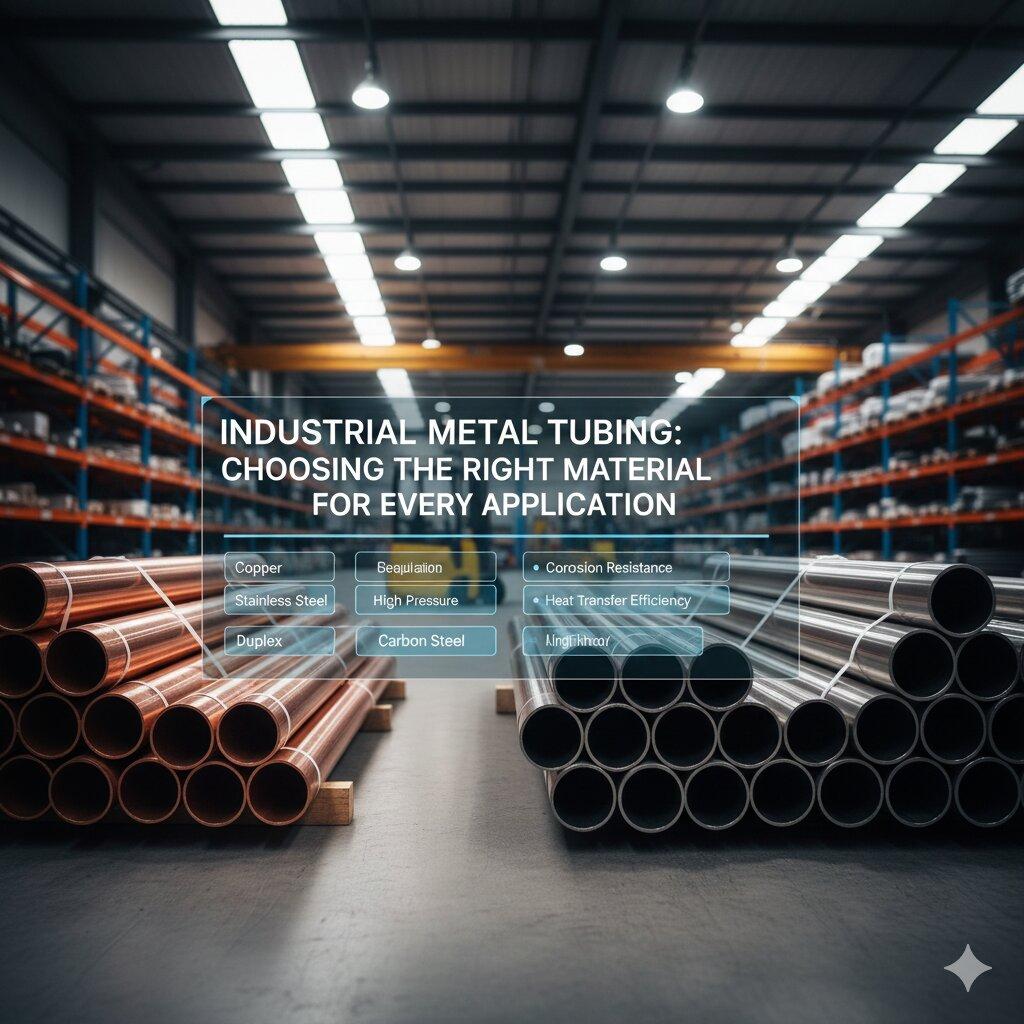
Industrial systems depend on tubing that can withstand pressure, corrosion, temperature swings, and long-term operational stress. Selecting the wrong material doesn’t just shorten equipment life — it increases maintenance costs, creates safety risks, and disrupts production.
Qemi International Inc supplies a full range of industrial metal tubing — including Copper, Stainless Steel, Duplex, Super Duplex, Carbon Steel, Admiralty Brass, and specialty alloys — to help buyers match the right material to the right job.
Understanding the strengths and limitations of each metal is the key to building reliable, efficient systems.
Why Material Selection Matters in Industrial Tubing
Every industrial environment places different demands on tubing. The correct material improves:
- Corrosion resistance under chemical, moisture, or saline exposure
- Pressure and temperature performance across varied operating conditions
- Heat transfer efficiency in thermal management applications
- Mechanical strength for structural and high-load applications
- System longevity, reducing total cost of ownership
- Compliance and safety across regulatory frameworks
A single misstep — such as choosing a grade that can’t handle chlorides, high pressure, or acidic conditions — can lead to premature failure or costly, unplanned downtime.
Common Industrial Tubing Materials and Their Best Uses
The table below outlines the most widely used industrial tubing materials, their ideal applications, and the core properties that make each one valuable:
| Material | Ideal For | Key Strengths |
|---|---|---|
| Stainless Steel Tubing (304, 316, 321) |
|
Excellent corrosion resistance, high durability, easy to clean and maintain |
| Duplex & Super Duplex Stainless Steel |
|
Exceptional mechanical strength, superior chloride resistance, extended service life |
| Carbon Steel Tubing |
|
High strength, cost-effective, excellent performance under high pressure |
| Copper Tubing |
|
Outstanding thermal conductivity, easy fabrication, natural antimicrobial properties |
| Admiralty Brass Tubing |
|
Strong corrosion resistance in seawater, high heat transfer efficiency |
| Specialty Alloys (Nickel, Titanium, etc.) |
|
Unmatched durability in the harshest operating conditions |
Note: Material selection should always be validated against specific operating conditions. Qemi’s technical team can assist with application-specific guidance.
How Industrial Buyers Evaluate the Right Tubing Material
A smart selection process goes beyond comparing price sheets. Buyers should systematically evaluate:
- Operating pressure and temperature ranges
- Chemical exposure — including chlorides, acids, seawater, solvents, and caustics
- Required mechanical strength and load-bearing capacity
- Heat transfer needs for thermal system performance
- Weldability and fabrication requirements for downstream processing
- Applicable compliance standards and material certifications
Qemi helps buyers evaluate these factors early — before procurement mistakes become expensive field problems.
Action Plan: How to Source Metallic Tubing the Smart Way
A structured sourcing approach minimizes risk and reduces rework. Use this framework to guide material procurement decisions:
| Goal | Strategy | Result |
|---|---|---|
| Performance | Match material grade to operating environment |
Reduced failure risk and longer system life |
| Compliance | Verify certifications and material traceability |
Easier regulatory inspections and audits |
| Budget | Avoid over-specifying materials beyond actual needs |
Controlled costs without sacrificing reliability |
| Supply | Partner with established, globally-sourced distributors |
On-time delivery and supply chain confidence |
| Fabrication | Confirm tolerances and weldability requirements early |
Faster installation with fewer field issues |
Common Mistakes When Sourcing Industrial Tubing
Even experienced procurement teams can fall into avoidable traps. Watch out for:
- Choosing a material based solely on upfront price — without considering lifecycle cost
- Using standard stainless steel where duplex or super duplex is required
- Over-specifying materials unnecessarily, inflating project budgets
- Buying tubing without mill test reports or material traceability documentation
- Ignoring corrosion risk assessments for the specific operating environment
- Selecting the wrong wall thickness for the pressure or structural requirements
A knowledgeable supplier prevents these issues long before installation — saving time, money, and safety exposure.
When Should Industrial Tubing Be Reassessed or Upgraded?
Industrial systems evolve, and so do their material demands. Reevaluation is recommended when:
- Operating pressure has increased beyond original design parameters
- Chemical exposure has changed due to process modifications or new products
- Corrosion, pitting, or recurring maintenance issues are observed
- Systems are being expanded or retrofitted with new components
- New compliance or environmental regulations require different material standards
Upgrading materials proactively — rather than reactively — protects uptime, reduces emergency repair costs, and extends system service life.
Why Industrial Buyers Choose Qemi International Inc
Qemi provides more than tubing — we provide application-driven guidance backed by global sourcing expertise and deep knowledge of industrial environments.
Buyers rely on Qemi for:
- Correct material selection aligned to real-world operating conditions
- Verified grades, certifications, and full compliance documentation
- Complete material traceability from mill to delivery
- Reliable global supply with on-time delivery accountability
- Technical support for complex, high-stakes environments
The right tubing material is the foundation of long-term system performance. Qemi ensures you get it right the first time — in Kingwood, TX, and beyond.
Ready to Source Industrial-Grade Metallic Tubing?
Don’t let material uncertainty slow your operation down. Partner with Qemi International Inc for verified metal tubing grades, full material traceability, global sourcing reliability, and compliance-ready documentation.
Contact Qemi International Inc today and get tubing that fits your application — no guesswork.
Frequently Asked Questions
Which metallic tubing is best for high-pressure systems?
Seamless stainless steel (316 or 321) or alloy steel. For chloride-heavy environments, duplex or super duplex is preferred.
Can over-specifying increase costs?
Yes. Higher-grade materials than needed add cost without improving performance.
How do suppliers support compliance?
Through mill test reports, material certifications, and full traceability documentation.
When should tubing grades be reviewed?
Twice — during design and again before procurement.
Does supplier location affect delivery?
Yes. Global sourcing networks reduce lead times and manage supply disruptions effectively.
Key Takeaways
- Wrong material selection leads to system failure and costly downtime
- Match tubing grade to operating environment, not just price
- Evaluate pressure, temperature, and chemical exposure early
- Each material serves a distinct industrial purpose
- Proactive reassessment prevents emergency repairs
- Mill test reports and traceability are non-negotiable
- The right supplier prevents procurement mistakes before they happen
AI Overview
Industrial metal tubing selection depends on matching the right material to the specific demands of the operating environment. Common materials include stainless steel, duplex and super duplex stainless steel, carbon steel, copper, admiralty brass, and specialty alloys — each designed for distinct pressure, temperature, and corrosion conditions.
Choosing the wrong grade can result in premature system failure, safety risks, and unplanned downtime. Key evaluation factors include operating pressure, chemical exposure, heat transfer requirements, and compliance standards. Buyers should also ensure full material traceability and mill test reports before procurement.
Qemi International Inc, based in Kingwood, TX, supplies a full range of industrial metal tubing with application-driven guidance, verified certifications, and global sourcing reliability — helping industrial buyers get the right material the first time.