
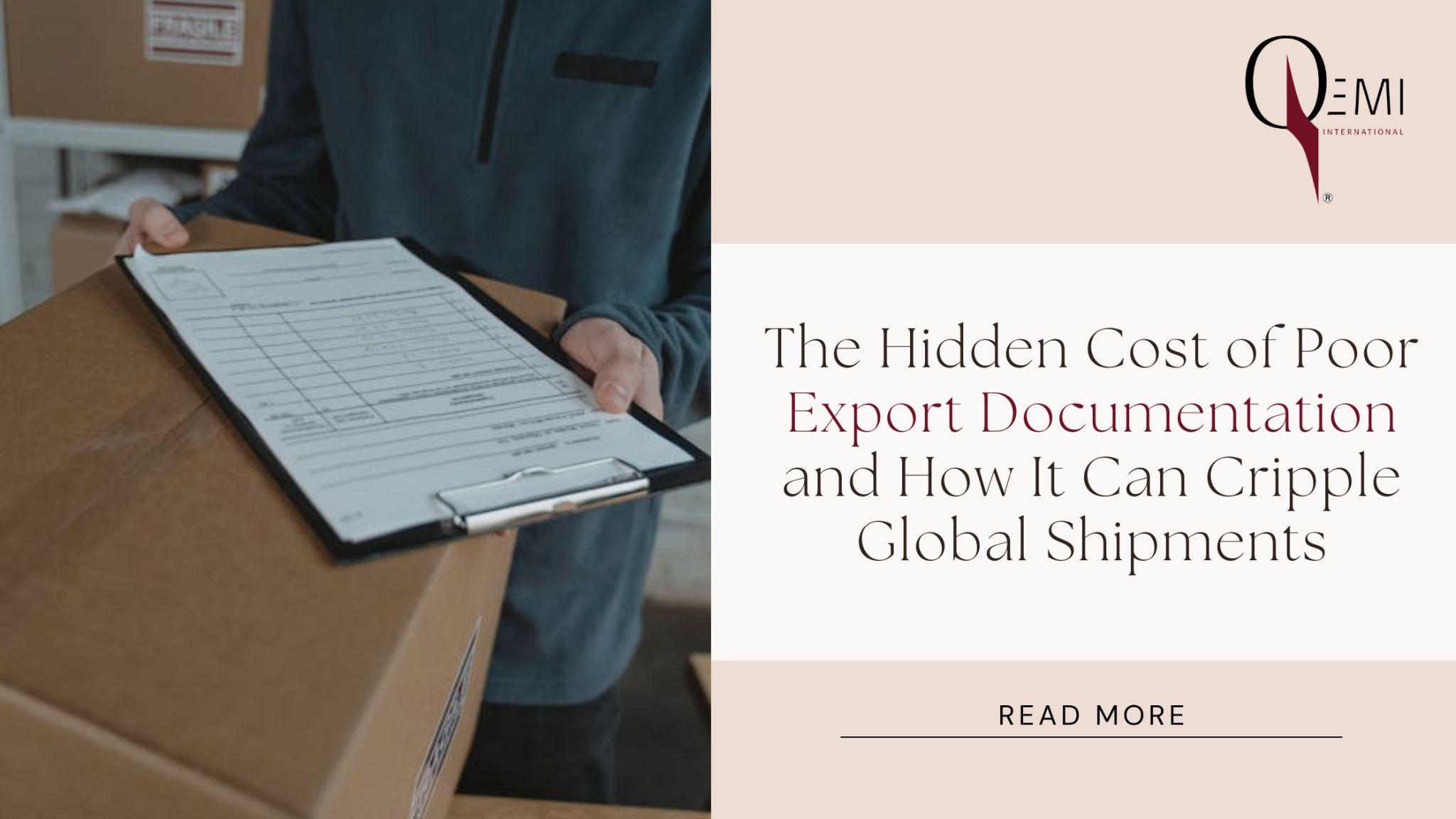
- Poor export documentation increases operational risk and costs, leading to shipment delays, customs interventions, financial penalties, and even rejected cargo.
- Accurate and compliant export paperwork ensures timely customs clearance, predictable delivery schedules, and legal protection across diverse international markets.
- Qemi International helps prevent these issues by ensuring accurate documentation, regulatory compliance, and reliable logistics support, so that shipments arrive on time and without costly disruptions.
Global trade opens the door to new markets, higher revenue, and long-term business expansion. However, every international shipment carries a layer of regulatory responsibility that cannot be ignored. Export documentation allows goods to move across borders, clear customs, and reach buyers without disruption. When documents are incomplete, inaccurate, or poorly prepared, shipments can be delayed, fined, detained, or even rejected entirely.
For exporters, these errors create far more than administrative inconvenience. They trigger supply chain breakdowns, increase operating costs, strain customer relationships, and expose businesses to regulatory penalties. In highly regulated industries such as chemicals and specialty materials, the risks are even higher, making documentation accuracy a critical component.
Why Export Documentation Is More Than Just Paperwork
Export documents are used by customs authorities, freight companies, banks, and regulatory agencies to verify the origin, value, classification, and compliance of every shipment. Common export documents include commercial invoices, packing lists, bills of lading, certificates of origin, export licenses, and, if required, declarations for controlled or hazardous goods.
Each document serves a specific purpose. For example, commercial invoices provide customs with transaction details while certificates of origin confirm where a product was manufactured. Because document requirements vary by product type, destination country, and mode of transport, the process is complex. Many exporters view documentation as paperwork to finalize rather than a critical compliance process. However, this misunderstanding is a leading cause of avoidable costs and shipment disruptions.
The High Stakes of Errors and Omissions
Customs Delays and Port Congestion
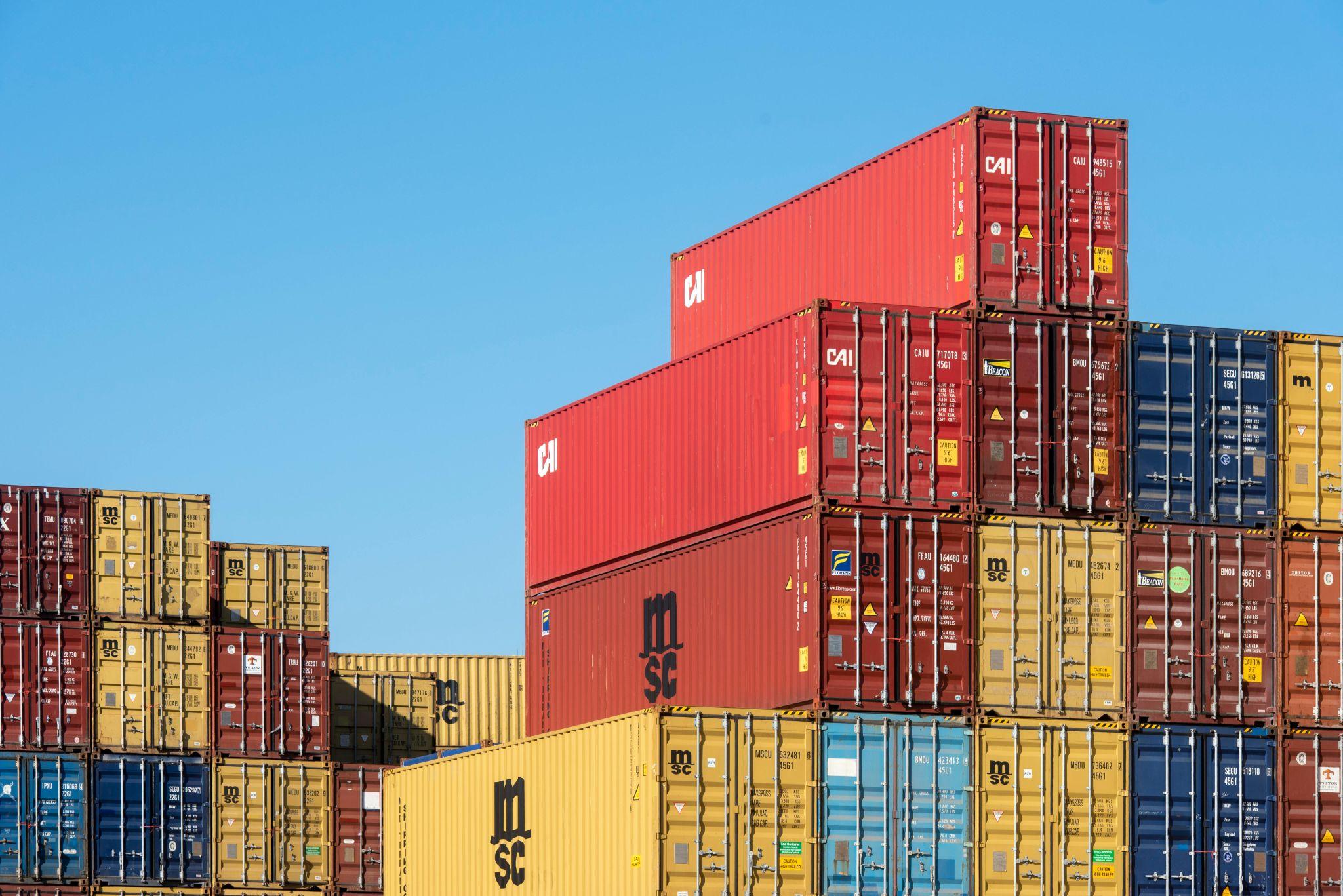
Incorrect or incomplete export documents are one of the leading causes of customs clearance delays worldwide. When paperwork does not meet destination-country requirements, shipments are flagged for manual inspection or verification. This slows processing and pushes containers into port storage zones while authorities request corrections or additional information.
Missed delivery windows disrupt buyer schedules, warehouse planning becomes unreliable, and downstream distribution timelines are thrown off. In time-sensitive industries such as chemicals, agriculture, and manufacturing, even a short delay can halt production or interrupt critical supply chains.
Regulatory Scrutiny and Higher Inspection Frequency
Customs authorities have risk profiling systems that track exporter compliance behaviour. Businesses that repeatedly submit incorrect documentation are classified as higher risk and subjected to more frequent inspections.
Once flagged, every future shipment is more likely to be physically examined, even when documents are accurate. This creates a permanent compliance burden that slows trade flows and increases administrative overhead. What begins as a documentation mistake can evolve into long-term regulatory friction.
Financial Penalties and Enforcement Actions
Incorrect product classification, undervaluation, missing licenses, or inaccurate declarations can lead to fines, seizure of goods, or suspension of export privileges.
For regulated products such as specialty chemicals, penalties can escalate quickly if safety or environmental documentation is incomplete. In certain jurisdictions, repeated violations can result in criminal liability for company directors and compliance officers.
Shipment Rejections and Forced Returns
When authorities determine that a shipment does not meet import regulations, they may reject the cargo entirely. In such cases, exporters must either destroy the shipment or return it to the country of origin at their own expense.
Returned shipments generate double freight costs, additional handling fees, storage charges, and potential product damage. For temperature-sensitive or hazardous materials, rejected shipments may become unsellable by the time they return, resulting in total inventory loss.
Contractual Breaches and Commercial Penalties
International supply contracts have strict delivery and compliance clauses. Documentation-related delays can trigger penalty clauses, liquidated damages, or cancellation of long-term supply agreements.
In just-in-time manufacturing environments, delayed raw materials can shut down production lines. The financial impact extends beyond logistics costs and directly affects revenue, customer retention, and brand credibility.
Increased Insurance Premiums and Coverage Risks
Cargo insurers assess exporter risk profiles based on shipment history. Businesses with recurring documentation failures are viewed as higher risk and may face increased premiums or reduced coverage limits.
In extreme cases, insurers may deny claims altogether if documentation inaccuracies contributed to cargo loss, damage, or seizure. This exposes exporters to direct financial liability for high-value shipments.
Foreign Exchange and Tax Compliance Exposure
Export documentation forms the foundation for foreign exchange reporting, GST or VAT reconciliation, and export incentive claims. Errors in shipment value, product classification, or destination reporting can trigger discrepancies in tax filings and foreign exchange declarations.
This can lead to blocked incentive claims, delayed remittances, regulatory audits, and penalties from tax authorities. For high-volume exporters, small documentation errors can compound into major reconciliation challenges.
Supply Chain Visibility Breakdown
Supply chains depend on digital tracking systems that draw data directly from export documentation. When paperwork is inaccurate, shipment status updates become unreliable, affecting inventory forecasting, warehouse allocation, delivery commitments, and production planning. Poor documentation weakens end-to-end supply chain visibility and undermines decision-making across procurement, operations, and customer service teams.
Internal Productivity Drain
Documentation failures create internal bottlenecks. Operations teams spend time correcting paperwork. Finance teams chase delayed payments. Legal teams respond to regulatory queries. Customer service teams manage escalations. Instead of running a predictable export process, organizations fall into reactive firefighting mode. Over time, this increases administrative costs, reduces efficiency, and distracts teams from growth-focused initiatives.
Restricted Market Access
Many countries impose strict import controls on chemicals, industrial goods, pharmaceuticals, and agricultural products. A record of documentation violations can lead to temporary or permanent import restrictions. This limits access to high-value markets and blocks geographic expansion plans.
Why Accurate Documentation Matters
Error-free export documentation gives exporters predictability and control in a complicated regulatory landscape. When documents are accurate and complete before submission, customs clearance proceeds smoothly, leading to faster delivery times and fewer surprises.
Clear records demonstrate compliance with export control laws and validate duties and taxes. If an authority audits a company’s transactions, streamlined paperwork proves good faith and adherence to the law. Finally, having the right documentation at the start supports efficient internal processes. It ensures finance teams receive payments on time, operations teams plan transport appropriately, and customer service teams can update clients with confidence.
Best Practices That Protect Exporters from Documentation Errors
Use Standardized Templates and Checklists
Consistent documentation templates ensure that all mandatory fields are completed accurately for every shipment, reducing the risk of omissions and formatting errors.
Leverage Technology-Driven Documentation Tools
Integrated systems connected to order management and ERP platforms minimize manual data entry and improve accuracy by automatically populating shipment details across all documents.
Classify Products with Precision
Proper Harmonized System classification ensures accurate duty assessment, regulatory compliance, and faster customs clearance across international markets.
Stay Informed on Regulatory Changes
Export regulations evolve frequently across regions. Continuous monitoring of destination-country requirements helps prevent compliance gaps and documentation mismatches.
Conduct Regular Internal Audits
Periodic documentation reviews identify inconsistencies early, allowing corrective action before errors result in shipment delays, fines, or rejections.
The Role of Logistics Partners in Documentation
Many exporters work with freight forwarders or compliance experts who take responsibility for preparing and verifying export paperwork. These partners combine regulatory knowledge with operational execution. A logistics partner ensures that documentation matches shipment details, complies with destination-country requirements, and aligns with the appropriate transport mode, whether sea, air, or land. They also act as a buffer when issues arise, helping exporters handle queries from customs authorities and ensuring that paperwork errors do not escalate into larger problems.
How Qemi Helps Prevent Delays, Fines, and Rejections
Export compliance and documentation are core to moving goods across borders successfully. For companies selling chemical products internationally, such as specialty polymers and treatments, working with a partner that understands documentation intricacies is an advantage.
Qemi International, Inc. combines global logistics experience with deep expertise in regulatory compliance. Our staff are trained and certified in dangerous goods standards for both marine (IMDG) and air (IATA) transport, ensuring that export documentation reflects all safety and legal requirements. Our multilingual sales and technical teams serve customers in more than 50 countries and understand diverse documentation and customs expectations across regions. This ability to communicate clearly and accurately reduces the likelihood of misunderstandings that lead to paperwork errors.
Qemi’s logistics support includes centralized documentation review early in the order process, helping prevent last-minute scrambles and ensuring that all required licenses, certificates, and invoices are in place before a shipment departs. Our supply chain management optimizes shipping routes and documentation flow, smoothing interactions with carriers and customs agents.
By embedding regulatory compliance into daily operations and documentation procedures, Qemi minimizes the risks of delays, fines, and rejections, allowing clients to focus on growth rather than paperwork.
Documentation as a Strategic Advantage
Export documentation may look like routine paperwork, but it plays a strategic role in global trade operations. Poor documentation slows customs clearance, invites penalties, triggers operational chaos, and undermines buyer confidence. Best practices protect revenue, speed delivery, and support predictable supply chains.
For exporters, especially in regulated industries like chemicals, partnering with experienced professionals who manage documentation and logistics adds value. Working with a partner such as Qemi International helps companies avoid the hidden costs of poor export documentation and ensures that global shipments arrive on time, compliant with regulations, and ready to satisfy customers.