
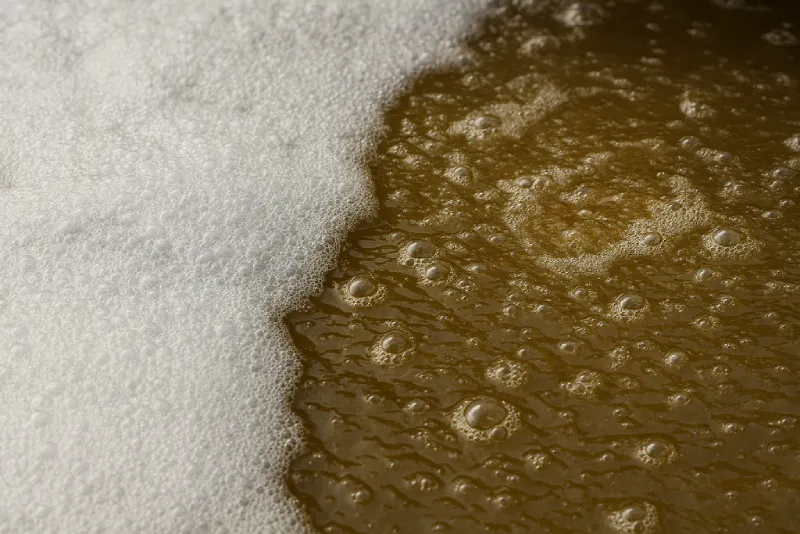
Foam may look harmless on the surface, but in industrial processes it creates real operational problems. In systems that rely on aeration, foam blocks air movement, reduces oxygen transfer, and limits process control. Over time, this leads to lower output, higher costs, and unstable performance.
Here’s how foam affects aeration efficiency and oxygen transfer, why it occurs, and how proper foam control supports stable and efficient operations.
Understanding Aeration and Oxygen Transfer
Aeration introduces air into liquid systems to supply oxygen. This process supports biological activity in wastewater treatment, fermentation, and other industrial applications. Oxygen transfer depends on direct contact between air bubbles and liquid. When bubbles move freely, oxygen dissolves efficiently and supports the process.
Any disruption to this contact reduces oxygen availability. Foam is one of the most common causes of this disruption, especially in systems with surfactants, organic matter, or high agitation.
How Foam Forms in Aerated Systems
Foam forms when air becomes trapped by surface‑active compounds in liquids. These compounds stabilize air bubbles and prevent them from collapsing. In aerated tanks, constant airflow increases bubble formation, allowing foam to build quickly.
Industries such as wastewater treatment, food processing, sugar production, and fermentation often face foam due to proteins, fats, and dissolved solids. Without proper control, foam spreads across tank surfaces and interferes with system balance.
Reducing Oxygen Transfer Due to Foam
Foam creates a physical barrier between air and liquid, limiting the movement of oxygen into the system. When oxygen transfer drops, biological and chemical reactions slow down. In wastewater treatment, this affects microbial activity. In fermentation, it impacts product quality and consistency.
Foam also causes uneven air distribution. Instead of dispersing evenly, air escapes through foam pockets, leading to poor mixing and wasted energy. Operators may increase airflow to compensate, which raises power use without addressing the root problem.
Causing Operational and Equipment Issues
Excess foam leads to more than oxygen loss. It can overflow tanks, clog vents, and create false level readings. Sensors and probes become less accurate, affecting process control. Cleaning and downtime increase, and product losses become more frequent.
In food and sugar processing, foam contamination raises hygiene concerns. In wastewater plants, foam reduces treatment capacity and contributes to odour problems. These issues affect compliance and overall plant reliability.
Controlling Foam to Improve Aeration Performance
Effective foam control supports stable aeration and oxygen transfer. Antifoam and defoamer solutions work by breaking the foam structure and releasing trapped air. This restores direct contact between air and liquid, allowing oxygen to dissolve properly.
Well‑designed antifoam products act quickly and remain effective under varying temperatures and process conditions. They help maintain steady airflow, reduce energy use, and support consistent system performance. For industries that rely on continuous aeration, foam control is a critical part of process stability.
Supporting Industrial Efficiency with Foam Control
Foam directly affects how well aeration systems operate. Limiting oxygen transfer and disrupting airflow creates inefficiency and instability across industrial processes. Targeted antifoam solutions help control foam at its source and support reliable aeration.
For industries focused on process control, product quality, and operational efficiency, managing foam is not optional. It is a practical step toward smoother operations and better outcomes across production systems.
At Qemi International Inc., we provide proven antifoam solutions designed to control foam where it impacts process stability and efficiency. Our products support reliable aeration, consistent oxygen transfer, and smoother operations across demanding industrial environments. Connect with us to find the right foam control solution for your application.